A review of the design & use of portable roof ladders
Background
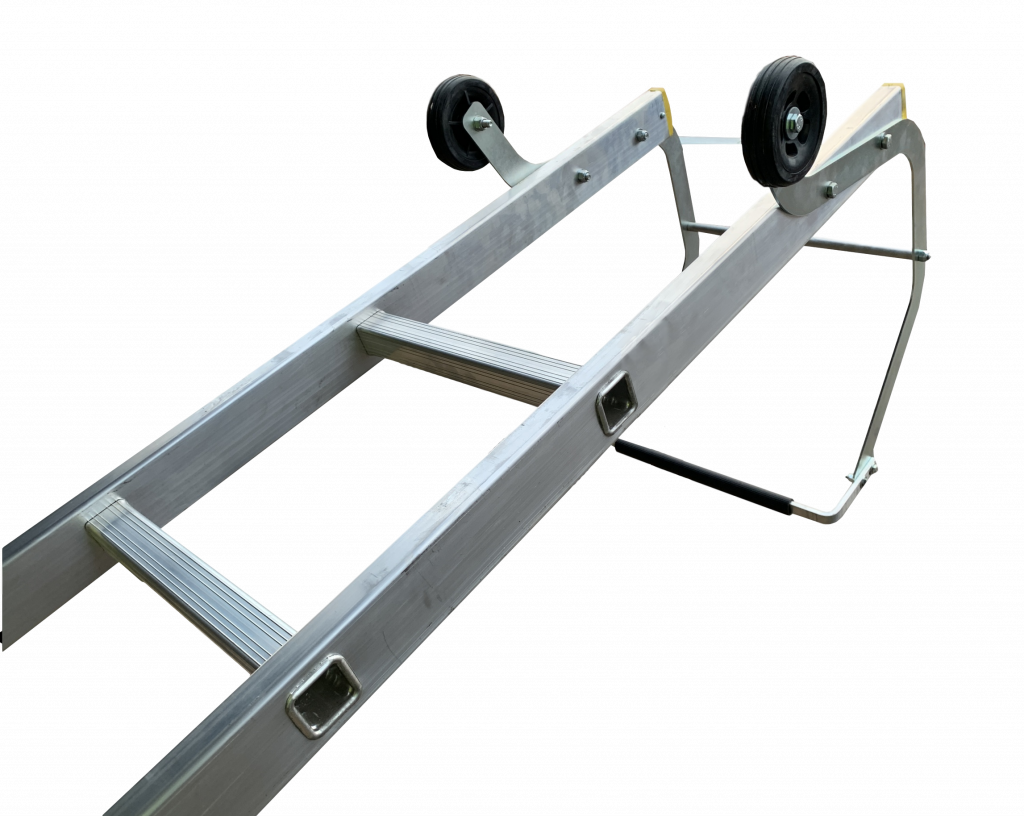
Portable roof ladders fall under the scope of the UK standard ‘BS 8634 – Portable Roof Ladders’ which was first published in 2017. Prior to that, there had been no standard for this type of ladder.
Roof ladder designs and the principles of their operation do not appear to have changed significantly for many years.
However, the tasks that portable roof ladders are now used for has changed significantly, as a result of developments in building design and the technology and equipment now being positioned on the roofs of buildings.
Roof ladders are commonly used in tasks which now include:
• The construction of new roofs;
• Roof and chimney maintenance and repairs;
• Fitting and maintenance of satellite / aerial equipment;
• Fitting and maintenance of heating flues;
• Fitting and maintenance of alternative energy sources.
Responding to Industry: The Ladder Association's Roof Ladder Research Programme
As a result of their wider use across many industries, the Ladder Association is increasingly being approached to provide detailed guidance on the safe and correct use of roof ladders. We recognised that we needed to embark on a programme of research to gather intelligence around the use of roof ladders across industry.
The results of our research would give us a much clearer picture of who uses roof ladders and the specifics of how they use them, in order for us to make clear recommendations on the revisions of standards and industry guidance. It would also enable enhanced collaboration with ladder manufacturers, regulators, and the wider industry to prevent falls from height when using roof ladders.
Jump straight to the following sections on this page:
Phase one of research saw the Ladder Association host a workshop on the subject of roof ladder use at the Test & Research Centre in Soham.
The aim of the workshop was to consider the development of a methodology for roof ladder use considering factors including the manual handling issues. The workshop was attended by roof ladder manufacturers, roof ladder personal fall protection system suppliers, trade bodies whose members use roof ladders, and ladder training suppliers.
The workshop discussed the following issues related to the use of roof ladders:
• User instructions for roof ladders;
• Working on roofs using roof ladders;
• Deploying, accessing and recovering the roof ladder;
• Using a leaning ladder as a means of deploying, accessing and recovering a roof ladder;
• The use of Personal Fall Protection (PFP) when using a roof ladder;
• Means other than a leaning ladder to deploy, access and recover a roof ladder;
The second phase saw us launch an industry-wide survey to gather intelligence around the use of roof ladders across industry.
The short online survey asked roof ladder users and those who manage or supervise the use of roof ladders, to share anonymous information on frequency of use, positioning and accessing the roof ladder, and the use of personal fall protection measures.
Open to roof ladder users in both the workplace and at home, the survey allowed us to gain a better understanding of roof ladders from a user’s perspective.
We reached users through a variety of channels, including (but not limited to) industry bodies, trade associations and trade press below:
The third phase was to collate a comprehensive report of the roof ladder research carried out by the Association to date, which was drafted by the Ladder Association Technical Committee, in consultation with officers of the Health and Safety Executive (HSE).
The scope of this 45-page report covers:
• Portable roof ladder, sometimes referred to as ‘cat’ ladders, and described in BS 8634 (Portable roof ladders ‐ Specification) as ladders “specifically designed solely to provide temporary access to pitched roofs with angles between 25° and 65° for tasks that are of short duration and low risk”;
• The methods by which a portable roof ladder is placed into position on a roof, accessed, and used to carry out tasks;
• Compliance with the requirements of the Work at Height Regulations 2005 and other relevant legislation when using a portable roof ladder.
Report Recommendations
The report makes six key recommendations:
1. HSE HSG33 Health & Safety at Roof work should be reviewed and revised to consider the findings of this report including:
‐ the use of a leaning ladder to deploy, access, and recover a portable roof ladder;
‐ the use of other types of temporary works’ equipment for that purpose;
‐ the use of Personal Fall Protection equipment when using a portable roof ladder.
2. The standard for portable roof ladders, BS 8634, should be reviewed considering the findings of this report;
3. A standard for the use of Personal Fall Protection equipment (sometimes referred to as ladder safety systems) in conjunction with portable ladders should be developed;
4. The Ladder Association publishes additional supplementary guidance (similar to LA455 ‐ Safe Use of Ladders and Stepladders) regarding the use of roof ladders, taking the findings of this report into account;
5. The data regarding portable roof ladder installation and retrieval in HSE Research Report RR478 should be located for further information to this report;
6. HSL report ES/2017/15 should be considered for publication as a publicly available HSE RR Research Report.
With the research phases now complete, the next phase is to develop new industry roof ladder guidance from the Ladder Association. This will be led by the Association’s Technical Committee.
Once the new roof ladder guidance is complete, the Ladder Association Training Committee will work on the development and roll-out of a new training course specifically for the use of portable roof ladders. Course release date to be confirmed.
Other Guidance from the Ladder Association
You can find additional ladder safety guidance, including information on telescopic ladders and changes to ladder standards, on our website: ladderassociation.org.uk/guidance